 4,92/5
  ✓
✓
Some nights, falling asleep is easy.
Other nights, your body is tired but your mind refuses to cooperate. You check the clock, turn the pillow over, change positions, and somehow become even more aware of the fact that you’re still awake.
That experience is one reason sleep supplements continue to attract so much attention.
But there is a problem with the way many of these products are marketed.
A long ingredient list can look impressive without necessarily proving that the finished product works.
That’s why we wanted to look at Yu Sleep differently.
Instead of simply repeating the manufacturer’s claims, this ROVIX review looks at the current formula, what each ingredient is intended to contribute, what the available evidence actually tells us, and—perhaps most importantly—what we still cannot determine from the label.
Quick ROVIX Verdict
Yu Sleep is an interesting multi-ingredient sleep supplement, but its proprietary blend is a meaningful limitation.
The current formula provides 0.9 mg of melatonin per serving, along with vitamin B2, vitamin B6, and a 637 mg blend containing tart cherry, magnesium glycinate, apigenin, lemon balm, 5-HTP, L-theanine, and GABA.
Several of those ingredients have scientific or traditional reasons for being included in a nighttime formula.
However, because the individual amounts inside the 637 mg blend are not disclosed, we cannot determine whether each ingredient is present at a dose comparable with the amounts studied independently.
That doesn’t automatically make Yu Sleep a bad product.
It simply means consumers should look at the formula with realistic expectations.
What Is Yu Sleep?
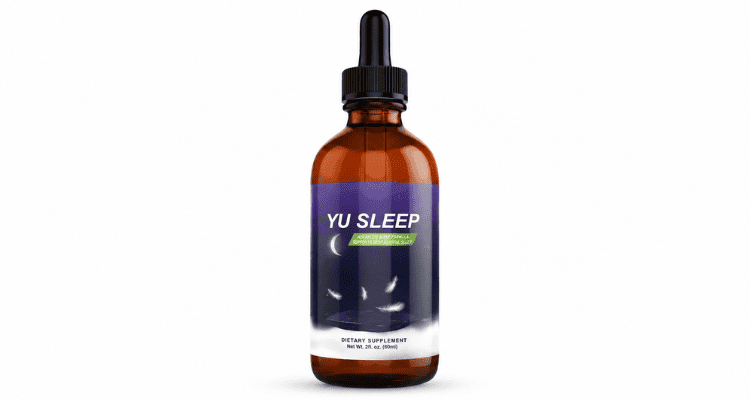
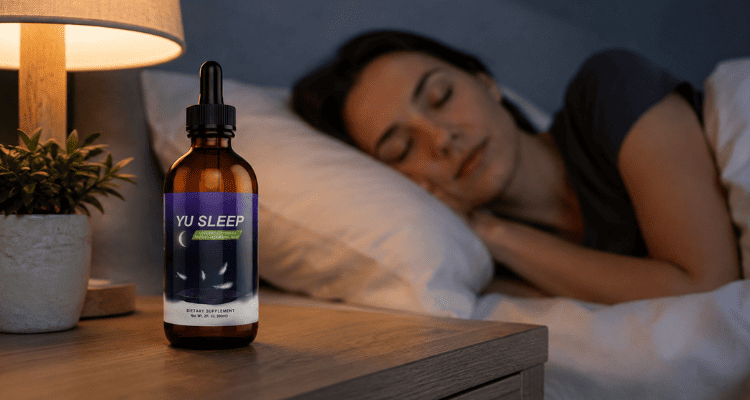
Yu Sleep is a liquid dietary supplement designed to be taken before bedtime.
The current product information lists a serving size of 2 mL, equivalent to two full droppers, with approximately 30 servings per bottle. The recommended timing is approximately 30 minutes before bed.
The formula contains ten listed ingredients across its individually disclosed nutrients and proprietary blend:
- Vitamin B2
- Vitamin B6
- Melatonin
- Red tart cherry juice concentrate
- Magnesium glycinate
- Apigenin
- Lemon balm extract
- 5-HTP
- L-theanine
- GABA
The interesting part isn’t simply the number of ingredients.
It’s the strategy behind the formula.
Instead of relying exclusively on melatonin, Yu Sleep combines melatonin with ingredients associated with relaxation, nutritional support, and sleep-related pathways.
How Does Yu Sleep Work?
Interested in learning more about Yu Sleep?
After reviewing what Yu Sleep is and how the product is formulated, you can visit the official product page to see the current product information and purchase options.
→ View the Official Yu Sleep Product Page
It’s important to be careful with this question.
Yu Sleep isn’t a prescription sleep medication, and the finished product should not be described as a clinically proven treatment for insomnia.
Instead, its ingredients are intended to support different aspects of a nighttime routine.
Melatonin, for example, is a hormone involved in regulating the body’s sleep-wake timing. Research on supplemental melatonin has produced mixed results depending on the population and the specific sleep problem being studied. A systematic review of chronic insomnia found limited evidence of benefit in adults, while other analyses have found modest effects in particular populations and formulations.
The other ingredients take different approaches.
Some are associated with relaxation.
Some have been studied in relation to sleep quality.
And some have considerably less human evidence than the marketing language surrounding them might suggest.
That’s an important distinction.
Ingredient plausibility is not the same thing as proof that the finished product works.
Yu Sleep Ingredients: A Closer Look
1. Melatonin — 0.9 mg
Melatonin is probably the most familiar ingredient in Yu Sleep.
The current label lists 0.9 mg per serving.
Melatonin isn’t simply a sedative.
It is a hormone produced naturally by the body, particularly in response to darkness, and it plays an important role in regulating circadian timing.
That means melatonin can make more sense for certain sleep-timing problems than for every form of insomnia.
And the fact that Yu Sleep uses 0.9 mg rather than a much larger dose is worth noting.
More melatonin doesn’t automatically mean better sleep.
In fact, research on melatonin for chronic insomnia in adults has produced mixed results, with systematic reviews finding relatively modest or inconsistent benefits depending on the population and outcome measured.
ROVIX assessment:
A legitimate sleep-related ingredient, but we would not interpret 0.9 mg as a guarantee of effectiveness.
2. Vitamin B2
Yu Sleep provides 0.5 mg of vitamin B2, listed as riboflavin 5-phosphate.
Vitamin B2 is an essential nutrient involved in normal cellular energy metabolism and other biochemical processes.
Its presence makes sense from a nutritional perspective.
However, that doesn’t mean adding more B2 automatically improves sleep.
ROVIX assessment:
A reasonable nutritional ingredient, but not a primary reason to choose the product.
3. Vitamin B6
The formula also provides 0.5 mg of vitamin B6, listed as pyridoxal 5-phosphate.
Vitamin B6 is involved in numerous biochemical reactions, including pathways related to neurotransmitter metabolism.
Again, however, an essential nutrient shouldn’t automatically be treated as a sleep medication.
ROVIX assessment:
Relevant to overall nutrition, but evidence for taking this dose specifically to improve sleep is not the main strength of the formula.
The 637 mg Proprietary Blend
Still considering Yu Sleep?
After reviewing the available customer experiences and complaints, you can check the official product page for the latest product details, pricing, and purchase information.
→ Check the Official Yu Sleep Offer
This is where the review becomes much more interesting.
Yu Sleep lists a 637 mg proprietary blend containing:
- Red tart cherry juice concentrate
- Magnesium glycinate
- Apigenin
- Lemon balm extract
- 5-HTP
- L-theanine
- GABA
The combined weight is disclosed.
The individual amounts are not.
That creates what we would call a transparency gap.
For example, if a clinical study investigates 200 mg of an ingredient, we cannot assume Yu Sleep contains 200 mg of that ingredient simply because the ingredient appears on the label.
The entire seven-ingredient combination totals 637 mg.
We don’t know how that total is divided.
That’s one of the most important things a potential buyer should understand before purchasing.
Red Tart Cherry
Tart cherry is an interesting addition because it is a food-derived ingredient that has been studied in connection with sleep.
Some small studies have reported improvements in sleep-related measures after tart cherry consumption, while other research has produced less convincing results.
That makes it a promising but not definitive ingredient.
ROVIX assessment:
Interesting supporting ingredient, but the evidence doesn’t justify treating tart cherry as a guaranteed sleep solution.
Magnesium Glycinate
Magnesium is an essential mineral involved in normal nerve and muscle function.
Magnesium glycinate is a form commonly used in supplements and is generally considered a well-tolerated form.
However, there is a big difference between:
“Magnesium is important for normal body function.”
and:
“This particular magnesium dose will improve your sleep.”
The second statement requires stronger evidence.
And because Yu Sleep doesn’t disclose the individual magnesium glycinate amount, we cannot determine the exact dose from the public label.
ROVIX assessment:
A sensible inclusion, but the undisclosed amount limits how confidently we can evaluate it.
Apigenin
Apigenin is a plant-derived flavonoid associated with chamomile and other plants.
It has attracted considerable attention in the wellness space because of its potential calming properties.
The problem is that human evidence specifically demonstrating meaningful sleep benefits remains much less established than the popularity of apigenin in supplement marketing might suggest.
ROVIX assessment:
Interesting ingredient, but the evidence should be considered preliminary rather than conclusive.
Lemon Balm
Lemon balm, or Melissa officinalis, has a long history of traditional use for relaxation.
Modern research has explored lemon balm in areas including stress, anxiety and sleep, often in combination formulas.
The challenge here is the same one we encounter throughout this formula:
We don’t know how much lemon balm is actually present in one serving.
ROVIX assessment:
A reasonable relaxation-oriented ingredient, but the undisclosed dose makes the formula harder to evaluate.
5-HTP
5-HTP deserves particular attention.
It is a precursor involved in serotonin production and has been investigated for several areas related to mood and sleep.
However, 5-HTP isn’t an ingredient consumers should treat casually.
Because it can influence serotonin pathways, people taking medications that also affect serotonin should speak with a healthcare professional before using a product containing 5-HTP.
And once again, Yu Sleep doesn’t disclose the exact amount of 5-HTP in the blend.
ROVIX assessment:
Potentially interesting, but also one of the ingredients that makes professional medication advice particularly important.
L-Theanine
L-theanine is an amino acid naturally found in tea.
It’s better known for its potential relationship with relaxation and calmness than for acting as a traditional sedative.
That makes it an intuitive addition to a nighttime formula, particularly for someone whose bedtime problem involves a busy or restless mind.
But the lack of an individually disclosed dose remains a limitation.
ROVIX assessment:
One of the more interesting relaxation-oriented ingredients in the formula, but the dose is unknown.
GABA
GABA is a naturally occurring neurotransmitter involved in inhibitory signaling in the nervous system.
It is frequently included in supplements marketed for relaxation.
However, oral GABA supplementation is more complicated than supplement marketing sometimes suggests, and questions remain about how effectively orally consumed GABA influences the brain.
ROVIX assessment:
Interesting, but we would not consider GABA alone a strong reason to buy the product.
What We Like About Yu Sleep
There are several things we think Yu Sleep gets right.
1. The formula isn’t built around an enormous melatonin dose
The product provides 0.9 mg of melatonin rather than relying on a very high amount.
2. It takes a multi-ingredient approach
Instead of treating sleep as a single-ingredient problem, the formula combines several different types of ingredients.
3. The liquid format is convenient
Some people simply prefer a liquid supplement to capsules or tablets.
4. The formula includes several genuinely interesting ingredients
Tart cherry, magnesium, L-theanine and lemon balm all have reasonable reasons for appearing in a nighttime formula.
5. The label gives us some important information
The melatonin, B2 and B6 amounts are individually disclosed rather than hidden inside the blend.
What We Don’t Like
1. The proprietary blend
This is the biggest issue.
Seven ingredients share 637 mg, but their individual amounts aren’t disclosed.
2. We can’t compare every ingredient directly with research doses
Without individual amounts, it becomes difficult to determine whether the formula provides research-relevant quantities.
3. The finished product itself isn’t the same as ingredient research
A study on L-theanine doesn’t prove that Yu Sleep works.
A study on tart cherry doesn’t prove that Yu Sleep works.
A study on melatonin doesn’t prove that Yu Sleep works.
To establish that, we’d ideally want well-designed clinical trials on the finished product itself.
4. It isn’t appropriate to treat persistent sleep problems with supplements alone
Sleep difficulties can have many underlying causes.
Who Might Consider Yu Sleep?
Yu Sleep may be worth considering for an adult who:
- Wants a multi-ingredient nighttime supplement
- Prefers a liquid format
- Is interested in a lower-dose melatonin formula
- Wants ingredients associated with relaxation as well as sleep timing
- Understands that supplements aren’t guaranteed to work
- Is comfortable with the proprietary-blend limitation
It may be less appealing to someone who wants complete transparency about every active ingredient.
For that person, a supplement with fully disclosed individual doses may be easier to evaluate.
Who Should Talk to a Doctor First?
The manufacturer advises consulting a qualified healthcare professional if you are pregnant or breastfeeding, managing a medical condition, or taking prescription medications.
That advice is particularly relevant because this formula contains 5-HTP, melatonin and several other active ingredients.
People with diagnosed sleep disorders should also avoid treating a supplement as a substitute for appropriate evaluation.
If someone is consistently struggling to sleep, the more useful question may not be:
“Which sleep supplement should I buy?”
It may be:
“Why am I not sleeping properly in the first place?”
That’s a much more productive starting point.
Yu Sleep vs. Other Sleep Strategies
Yu Sleep is only one part of the sleep equation.
Your sleeping environment matters.
Your schedule matters.
Your exposure to light matters.
Your stress levels matter.
And, yes, something as simple as your pillow can influence nighttime comfort.
That’s why ROVIX also looks at sleep products beyond supplements. If you’re interested in the physical side of your sleep setup, read our Derila Ergo Pillow Review for an independent look at an ergonomic pillow designed around head and neck support.
The goal isn’t to convince readers that one product solves everything.
It’s to help them understand the different pieces of the puzzle.

Is Yu Sleep Worth It?
This is the question most readers actually want answered.
And the honest answer is:
It depends.
Yu Sleep has a coherent formula concept.
The 0.9 mg melatonin dose is clearly disclosed.
Several of the supporting ingredients have legitimate scientific or traditional reasons for being included.
But the proprietary blend prevents us from evaluating seven of those ingredients at the individual-dose level.
That’s not a minor detail.
It’s the biggest reason we would hesitate to give Yu Sleep an unqualified recommendation.
If you value a multi-ingredient formula and are comfortable with that limitation, Yu Sleep may be worth considering.
If complete dose transparency is your priority, there are other formulations that may be easier to evaluate.
ROVIX Final Verdict
Still interested in Yu Sleep?
If you’ve reviewed the positive experiences, negative feedback, complaints, and other considerations discussed in this article, you can visit the official product page and make your own informed decision.
Yu Sleep is an interesting sleep supplement, but it’s not a magic solution—and the proprietary blend deserves careful attention.
We like the overall concept.
We like the relatively modest 0.9 mg melatonin dose.
We like that the formula doesn’t rely exclusively on melatonin.
But we also think consumers deserve to know exactly how much of each active ingredient they’re taking.
That’s where Yu Sleep falls short.
Most importantly, the evidence behind individual ingredients should not be confused with clinical proof that the finished Yu Sleep formula treats insomnia.
For occasional nighttime support, it may be a reasonable product to investigate.
For persistent or serious sleep problems, however, a supplement should not replace professional evaluation.
ROVIX Bottom Line
Interesting formula: Yes.
Worth considering: Potentially.
Clinically proven to treat insomnia: No.
Biggest drawback: Proprietary blend with undisclosed individual doses.
Frequently Asked Questions
Is Yu Sleep a melatonin supplement?
Yes. The current formula provides 0.9 mg of melatonin per 2 mL serving.
How much melatonin is in Yu Sleep?
The current label lists 0.9 mg of melatonin per serving.
What ingredients are in Yu Sleep?
The formula includes vitamin B2, vitamin B6, melatonin, red tart cherry juice concentrate, magnesium glycinate, apigenin, lemon balm extract, 5-HTP, L-theanine and GABA.
Does Yu Sleep contain magnesium?
Yes. Magnesium glycinate is included in the 637 mg proprietary blend. The individual amount isn’t separately disclosed.
Does Yu Sleep contain 5-HTP?
Yes. 5-HTP from Griffonia seed extract is one of the ingredients in the proprietary blend.
How do you take Yu Sleep?
The current product information recommends a 2 mL serving, or two full droppers, approximately 30 minutes before bedtime.
Is Yu Sleep safe?
No supplement should be assumed to be universally safe. People who are pregnant or breastfeeding, have medical conditions, or take prescription medications should consult a healthcare professional before use.
Can Yu Sleep cure insomnia?
No. Yu Sleep should not be presented as a treatment or cure for insomnia. Persistent sleep problems can have underlying causes that require professional evaluation.
Is Yu Sleep worth buying?
It may be worth considering for someone looking for a multi-ingredient liquid sleep supplement, but the proprietary blend means the individual doses of seven ingredients cannot be independently assessed from the label.
Read Our Other Yu Sleep Articles
Still researching?
You may also want to read:
Yu Sleep Reviews and Complaints
Want to know what customers are saying? Explore our analysis of customer experiences, complaints, refund concerns, and customer-service feedback.
👉Yu Sleep Reviews and Complaints
A deeper look specifically at customer complaints, refund issues, side effects, and potential concerns.
Yu Sleep Ingredients
Want to know what’s inside the formula? Explore the Yu Sleep ingredients and learn more about the purpose of each component.
Yu Sleep Reviews 2026
See our broader analysis of Yu Sleep reviews, customer experiences, and what consumers should consider before purchasing.