
⭐ ⭐ ⭐ ⭐ ⭐ 4,92/5 🔵✓
If you wake up with a stiff neck, constantly adjust your pillow during the night, or simply feel that your current pillow never quite supports you properly, changing your pillow can make a surprising difference in your nightly comfort.
That is the idea behind the Derila Ergo Pillow, an ergonomic memory foam pillow designed around a contoured shape rather than the traditional rectangular pillow design.
But does an ergonomic shape automatically mean better sleep?
Not necessarily.
A pillow can have an interesting design and still be the wrong fit for a particular person. Your sleeping position, shoulder width, mattress firmness, preferred pillow height, and personal comfort all matter.
So, in this Derila Ergo review, we will look beyond the marketing and examine what the pillow is designed to do, how its construction may affect comfort, who is most likely to benefit from it, and what you should consider before buying.
What Is the Derila Ergo Pillow?
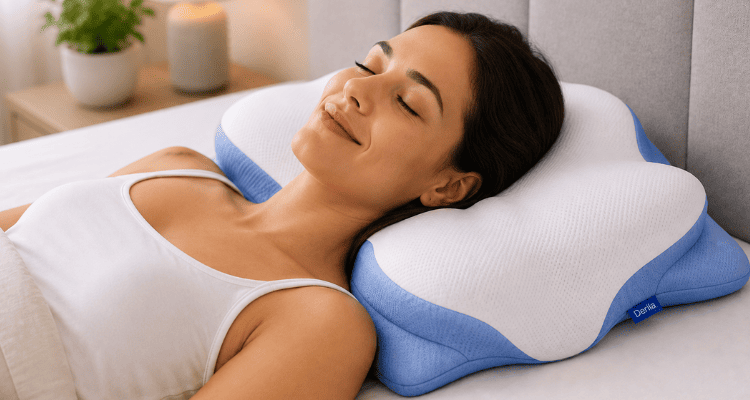
The Derila Ergo is a contoured memory foam pillow designed to provide more structured support than a conventional soft pillow.
According to the manufacturer, the pillow measures approximately 54 cm by 36 cm and uses viscoelastic memory foam designed to adapt to the body’s shape. Its distinctive contour is intended to support the head and neck while accommodating different sleeping positions.
The design is quite different from a standard pillow.
Instead of simply providing a flat surface for your head, the contours create different support areas around the head, neck and shoulders.
That distinction is important because the goal isn’t simply to make the pillow softer.
The goal is to create a more consistent sleeping position.
How Does the Derila Ergo Work?
The basic idea behind an ergonomic pillow is straightforward.
When you sleep, your head and neck need enough support to avoid being pushed too far upward or allowed to sink too deeply. A pillow that is too high or too low can feel uncomfortable, particularly for people who sleep on their side or back.
The Derila Ergo uses its contoured shape to create a central area for the head while providing additional support around the neck and sides.
This is one of the biggest differences between the Derila Ergo and a traditional fluffy pillow.
Instead of adjusting the amount of filling every night, the shape of the pillow determines where your head and neck are supported.
That can be an advantage for someone who prefers a structured pillow.
It can also be a disadvantage if you strongly prefer a soft, highly adjustable pillow.
The Memory Foam Construction
One of the main components of the Derila Ergo is high-density polyurethane memory foam.
Memory foam is designed to respond to pressure and body heat, allowing the material to conform to the shape of the person using it.
The manufacturer says the foam is designed to maintain its form rather than simply flattening like some traditional pillows.
That matters because consistent support is one of the main reasons people choose molded memory foam pillows.
However, there is a trade-off.
A fixed memory foam design doesn’t offer the same adjustability as a pillow filled with removable shredded foam or other loose materials.
In other words, you cannot simply remove a handful of filling if the pillow feels too high.
The shape is part of the product, so finding the right fit is important.
What About the Cooling Design?
The Derila Ergo is also marketed with a cooling cover intended to help manage heat during the night.
This is worth looking at realistically.
Memory foam pillows can sometimes feel warmer than traditional fiber-filled pillows because of the density of the material. A breathable or cooling-oriented cover can potentially improve the overall sleeping experience, but it shouldn’t be interpreted as a guarantee that the pillow will feel cold all night.
Your room temperature, bedding, body temperature and sleeping position can all influence how warm you feel.
So, the cooling feature is best viewed as a comfort feature rather than a miracle solution for hot sleeping.
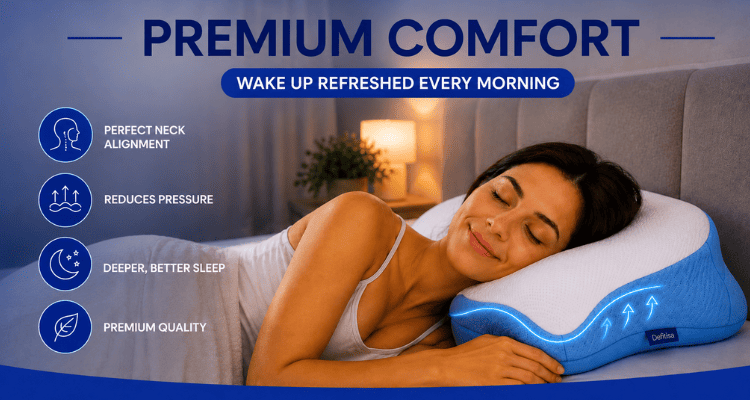
Interested in learning more about Derila Ergo?
You can visit the official product page to review the current product information, features, and available options.
→ View the Official Derila Ergo Product Page
Is the Derila Ergo Good for Side Sleepers?
Side sleepers are often more sensitive to pillow height because there is a larger gap between the shoulder and the mattress.
A pillow that is too low can allow the head to tilt downward, while one that is too high can push the head in the opposite direction.
The Derila Ergo’s contoured structure is intended to provide more support around this area.
That makes the design particularly interesting for people who prefer sleeping on their side.
However, the important word is fit.
Two people who both sleep on their sides can need completely different pillow heights depending on their shoulder width, mattress firmness and body proportions.
So, the ergonomic design may work very well for one person and feel awkward for another.
What About Back Sleepers?
Back sleepers may also appreciate a contoured pillow because the head and neck generally require a different type of support than they do when sleeping on the side.
The lower central area of a contoured pillow can help prevent the head from being pushed excessively forward, while the surrounding structure provides additional neck support.
Again, comfort is personal.
If you normally sleep on a very soft, low-profile pillow, the structured shape may take some getting used to.
And Stomach Sleepers?
This is where things become more individual.
People who sleep primarily on their stomach often prefer a thinner, softer pillow because excessive height can place the neck in an uncomfortable position.
A pronounced ergonomic contour may therefore not be the ideal match for every stomach sleeper.
If you primarily sleep on your stomach, pillow height should be one of the first things you consider before purchasing any structured ergonomic pillow.
The Adjustment Period
One thing worth mentioning about products like the Derila Ergo is that a new pillow can feel strange at first.
That’s not necessarily a sign that the pillow is bad.
Your body is accustomed to the shape and height of your current pillow. Changing those variables can take some time.
A few nights of adjustment may be completely normal.
The important question is whether the pillow becomes more comfortable as you adapt to it.
If discomfort continues or becomes worse, however, that’s a good reason to reconsider whether the pillow’s shape and height are appropriate for you.
Derila Ergo Pros and Cons
Pros
- Contoured ergonomic design
- Memory foam construction
- Designed for structured head and neck support
- Suitable for people who sleep on their side or back
- Cooling-oriented cover
- Distinctive design compared with traditional pillows
- Available in a 54 × 36 cm format
Cons
- The unusual shape may take time to get used to
- Fixed foam design offers less adjustability than shredded-fill pillows
- May not be the best choice for every stomach sleeper
- Personal fit depends heavily on body proportions and sleeping position
- Ergonomic design does not guarantee better sleep for everyone
Is the Derila Ergo a Treatment for Neck Pain?
Still considering Derila Ergo?
After reviewing both the product features and customer concerns, you can check the official product page for the latest information and terms.
→ Check the Official Derila Ergo Offer
This is an important distinction.
A pillow is a sleep accessory, not a medical treatment.
A better-supported sleeping position may improve comfort for some people, particularly when their existing pillow is poorly suited to their sleeping position. But persistent neck pain can have many causes that have nothing to do with a pillow.
Therefore, it would be misleading to treat the Derila Ergo as a guaranteed solution for neck pain or other medical conditions.
If you have persistent or severe pain, numbness, weakness, or other concerning symptoms, it’s better to speak with an appropriate healthcare professional rather than relying on a pillow alone.
Derila Ergo vs. a Traditional Pillow
The biggest difference comes down to structure versus flexibility.
A traditional pillow is often soft and forgiving. You can squeeze it, fold it, move it around and change its shape throughout the night.
The Derila Ergo takes the opposite approach.
Its shape is designed to provide specific support zones without requiring the sleeper to constantly adjust the pillow.
That can be excellent for someone who wants consistency.
But if you like to shape your pillow exactly the way you want, a traditional or adjustable pillow may offer more flexibility.
Neither approach is automatically better.
It depends on what your body prefers.
Is the Derila Ergo Worth It?
The answer depends largely on what you are looking for.
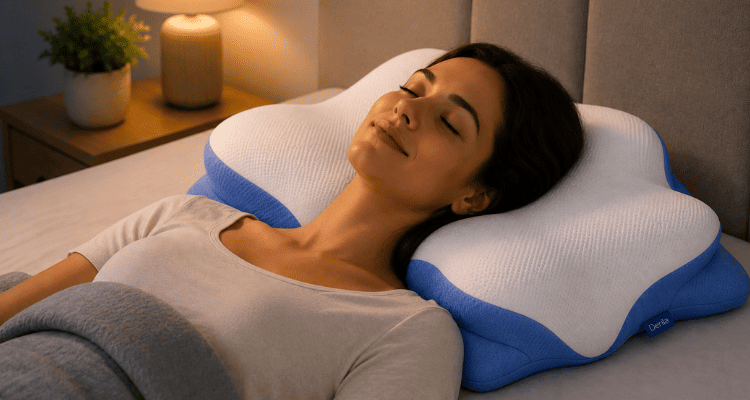
If you want a structured pillow with a contoured memory foam design and you mainly sleep on your side or back, the Derila Ergo is an interesting option to consider.
If you prefer very soft, fluffy pillows or frequently change your sleeping position to your stomach, the design may be less appealing.
The most important thing is not to buy an ergonomic pillow simply because the word “ergonomic” sounds impressive.
Look at the actual design.
Consider your sleeping position.
Think about the height and firmness you normally find comfortable.
And remember that better sleep usually comes from several factors working together.
For example, the right pillow can be part of a comfortable nighttime routine, but your sleep environment and habits matter too. If you are also researching supplements intended to support nighttime relaxation, you can read our Yu Sleep review for a separate look at that category.
Final Verdict
Want to learn more before deciding?
Review the official product information and make your own informed decision.
→ Learn More About Derila Ergo
The Derila Ergo takes a different approach from the average pillow.
Its contoured memory foam construction is designed to provide structured support rather than simply creating a soft surface for your head.
That makes it particularly interesting for side and back sleepers who want a more defined sleeping position.
At the same time, it isn’t a universal solution.
The unusual shape may require an adjustment period, and the fixed design means you cannot customize the pillow’s height as easily as you can with some adjustable alternatives.
Our overall takeaway is simple:
The Derila Ergo is worth considering if you want structured ergonomic support, but the best pillow is ultimately the one that matches your body, sleeping position and comfort preferences.
A good pillow should complement your sleep—not make you spend half the night thinking about your pillow.
Frequently Asked Questions
Is the Derila Ergo a memory foam pillow?
Yes. The manufacturer describes the Derila Ergo as being made with high-density polyurethane memory foam.
Is the Derila Ergo good for side sleepers?
Its contoured design is intended to provide additional support for side sleeping, but whether it is comfortable depends on factors such as shoulder width, body proportions and mattress firmness.
Can stomach sleepers use the Derila Ergo?
They can, but stomach sleepers should pay particular attention to pillow height and neck position. A structured ergonomic pillow may not be the best fit for everyone who sleeps primarily on their stomach.
Does the Derila Ergo stay cool?
The manufacturer promotes a cooling-oriented cover designed to help with temperature regulation. Actual comfort will also depend on room temperature, bedding and individual sleeping habits.
How long does it take to get used to an ergonomic pillow?
It can take several nights for someone accustomed to a traditional pillow to adapt to a new contour. If discomfort persists rather than improving, the pillow may simply not be the right fit.
Can the Derila Ergo cure neck pain?
It should not be considered a treatment or cure for neck pain. A supportive pillow may improve sleeping comfort for some people, but persistent pain should be evaluated separately.
🔗 Related Derila Ergo Articles
Derila Ergo Pillow Reviews and Complaints
Want to take a deeper look at customer complaints, delivery issues, refunds, and customer-service experiences?
👉 Read Derila Ergo Pillow Reviews and Complaints
Derila Ergo Pillow Pros and Cons
Want a quick comparison before making a decision?
👉 Read Derila Ergo Pillow Pros and Cons
Derila Ergo Pillow Reviews Consumer Reports
See what we could verify about Consumer Reports and the claims surrounding independent testing of the Derila Ergo Pillow.